

Page Summary
-
Rule-based user lists in Google Ads allow targeting users based on custom remarketing tag parameters like
event,cartsize, andcheckoutdate. -
You can define user segments with rules combining multiple conditions, such as users who visited the checkout page with more than one item in their cart or users who checked out during specific months.
-
These defined user segments can be used to apply bidding strategies, like increasing bids by a certain percentage for specific ad groups or campaigns.
This guide walks through a sample scenario for building and targeting a rule-based audience segment in the Google Ads API.
Scenario overview
Suppose you have a website where you've configured custom remarketing tag parameters to capture the following user attributes:
event(orecomm_pagetype): A string parameter indicating the category of page on your site, such as"checkout"or"cart".cartsize(orcart_size): A numeric parameter representing the number of items in a user's shopping cart, evaluated using numeric comparison operators such asGREATER_THAN.checkoutdate: A date parameter (YYYYMMDDformat, such as"20191031", evaluated in the account's time zone) indicating the date on which a user checked out. You only set this parameter when a user completes a purchase.
You want to show more impressions to users who placed multiple items in their shopping carts and initiated the checkout process. You also want to reach users who made a purchase during November and December because you plan to run a major sale on your site during those months.
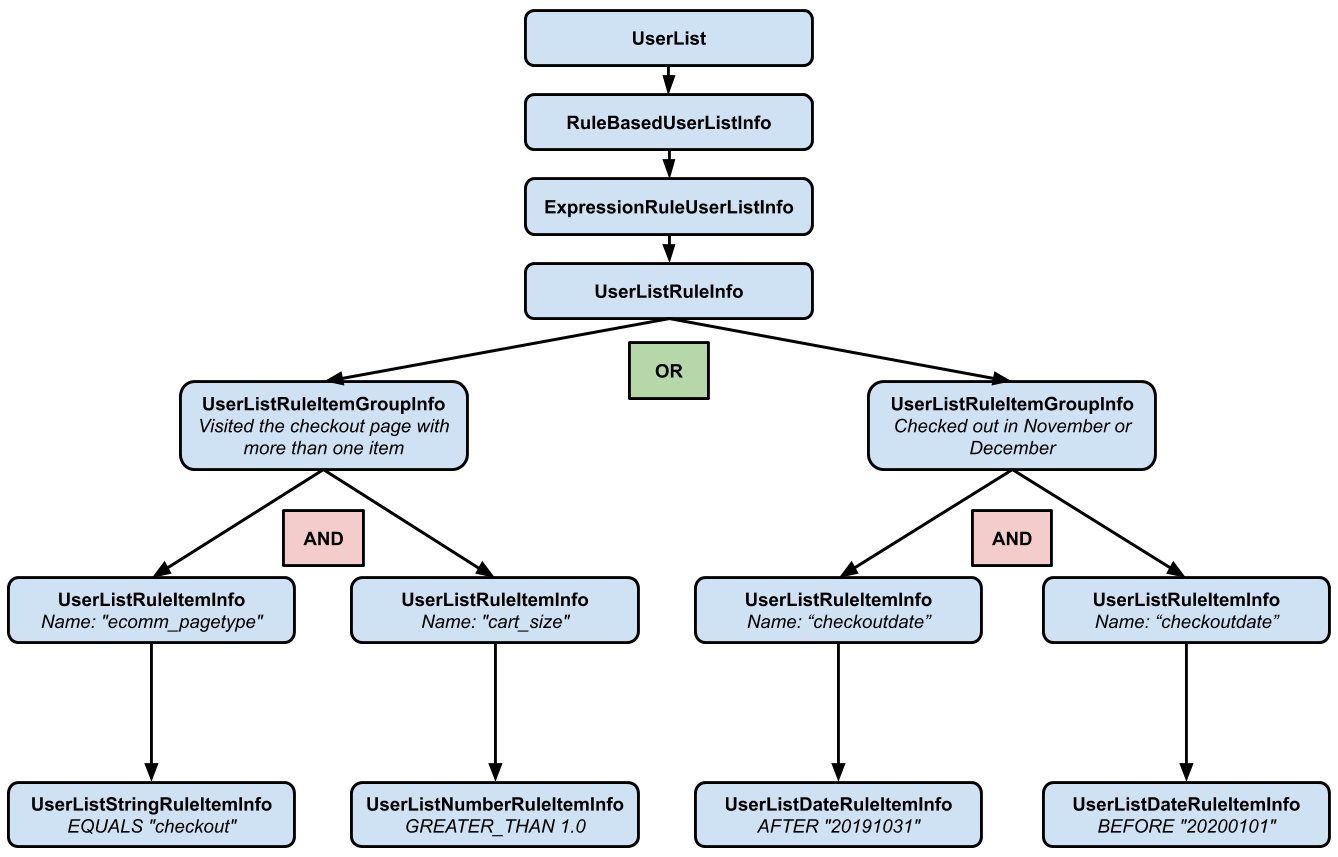
You can describe this audience with either of the following conditions:
- Users who visited the checkout page and had more than one item in their cart.
- Users who checked out during the months of November or December.
If a user matches either condition 1 or condition 2, you want to increase your bids in specific ad groups or campaigns by 25%.
Objects
A rule-based list is represented in the Google Ads API as a
rule_based_user_list.
The following illustration shows the structure of the
rule_based_user_list for this scenario:
Next steps
- Create rule item groups to define the individual
parameter conditions and group them with
ANDlogic. - Create a user list to combine the rule item groups with
ORlogic, optionally prepopulate past users, and target the list with a bid modifier.