
The Times of India (TOI) is one of India's largest digital news publishers, serving global audiences with national, city, and topic-led journalism across web, Android, and iOS. TOI also offers TOI+, a premium ad-free reading experience with exclusive stories and other benefits. TOI reaches a global, multi-segment, multi-device audience seeking timely, trustworthy reporting on India-focused and worldwide stories.
Impact and results
- The average daily logins and sign-ups through Google One Tap grew by ~30% from October 2025 to March 2026, reflecting stronger user preference for seamless login experiences.
- At the same time, the login share through traditional methods such as Email + Password/OTP saw an ~18% drop, indicating a continued shift in user preference towards frictionless authentication methods like Google One Tap.
- Privacy-Resilient Infrastructure: Facing impending third-party cookie restrictions that threatened legacy flows, TOI used FedCM to create a robust, cookie-free sign-in experience. This proactive shift future-proofed their identity architecture while preserving high user trust.
- Elevated Data Quality & Reduced Overhead: By replacing brittle sessions with verified Google identities, TOI saw a sharp reduction in duplicate accounts, vastly improving their CRM and analytics accuracy. Operationally, this also led to a significant drop in password-reset and "can't log in" support tickets, directly lowering operational drag.
- Seamless Premium Continuity: For TOI+ subscribers, cross-device access is critical. Sign in with Google Automatic Sign-In feature eliminated the friction of re-authentication across devices, ensuring paying readers maintained uninterrupted access to their premium ad-free experience.
The Challenge
Prior to implementing a modernized identity stack, TOI faced significant friction across the user journey:
Acquisition Drop-offs: Long, multi-step email, OTP, and password flows on mobile led to high abandonment rates. Users were increasingly reluctant to create and remember new credentials, and OTP timeouts or keyboard friction only added to the drop-offs.
Re-engagement Friction: Password resets and inconsistent sessions drastically reduced return-visitor rates.
Subscriber Continuity: Cross-device continuity for premium TOI+ subscribers needed to be seamless, but legacy flows were failing to deliver.
Privacy & Tech Shifts: Industry-wide deprecation of third-party cookies created uncertainty for legacy federated login flows. TOI proactively addressed this challenge by implementing a privacy-resilient infrastructure, ensuring the long-term reliability of their authentication methods.
The Solution: Sign in with Google & FedCM
TOI replaced its high-friction, multi-step redirect flows with a modernized Sign in with Google (SiwG) integration, deeply enhanced by the Federated Credential Management API (FedCM).
This multi-faceted approach optimized entry paths per surface:
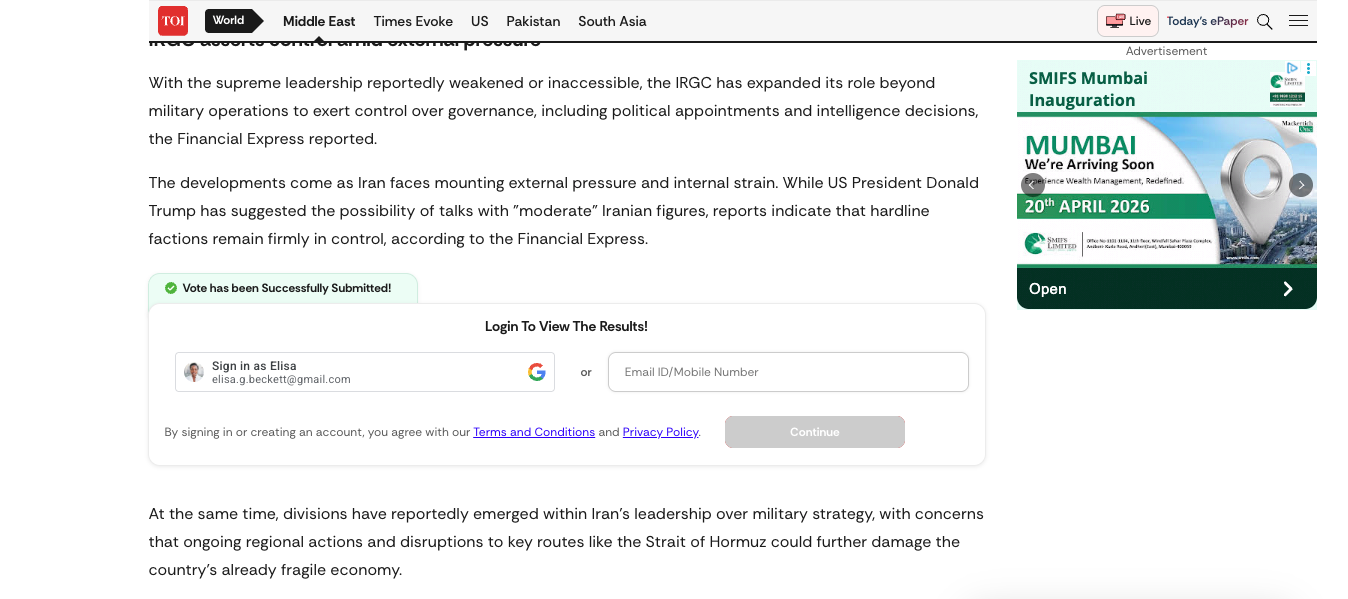
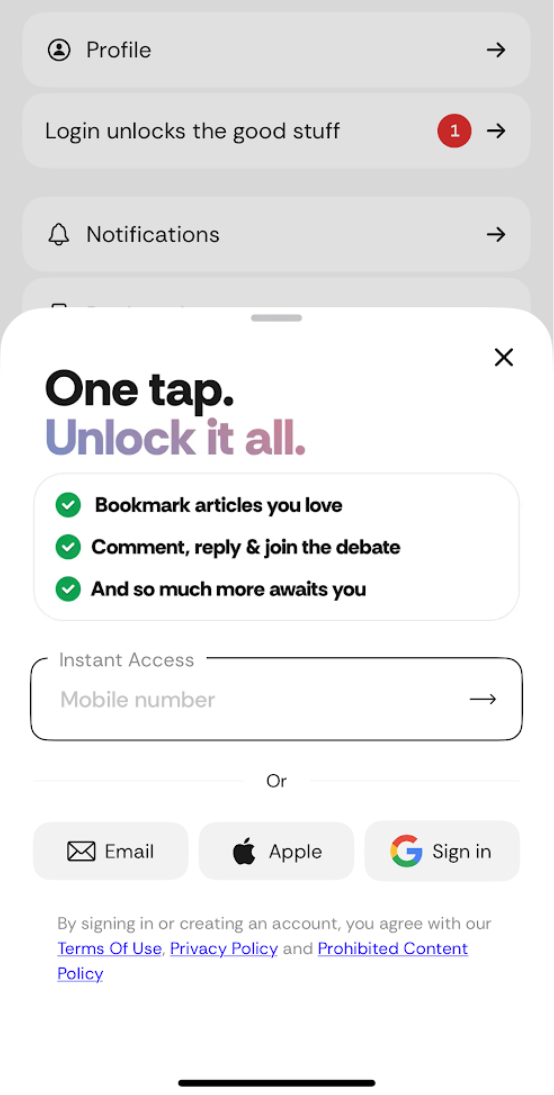
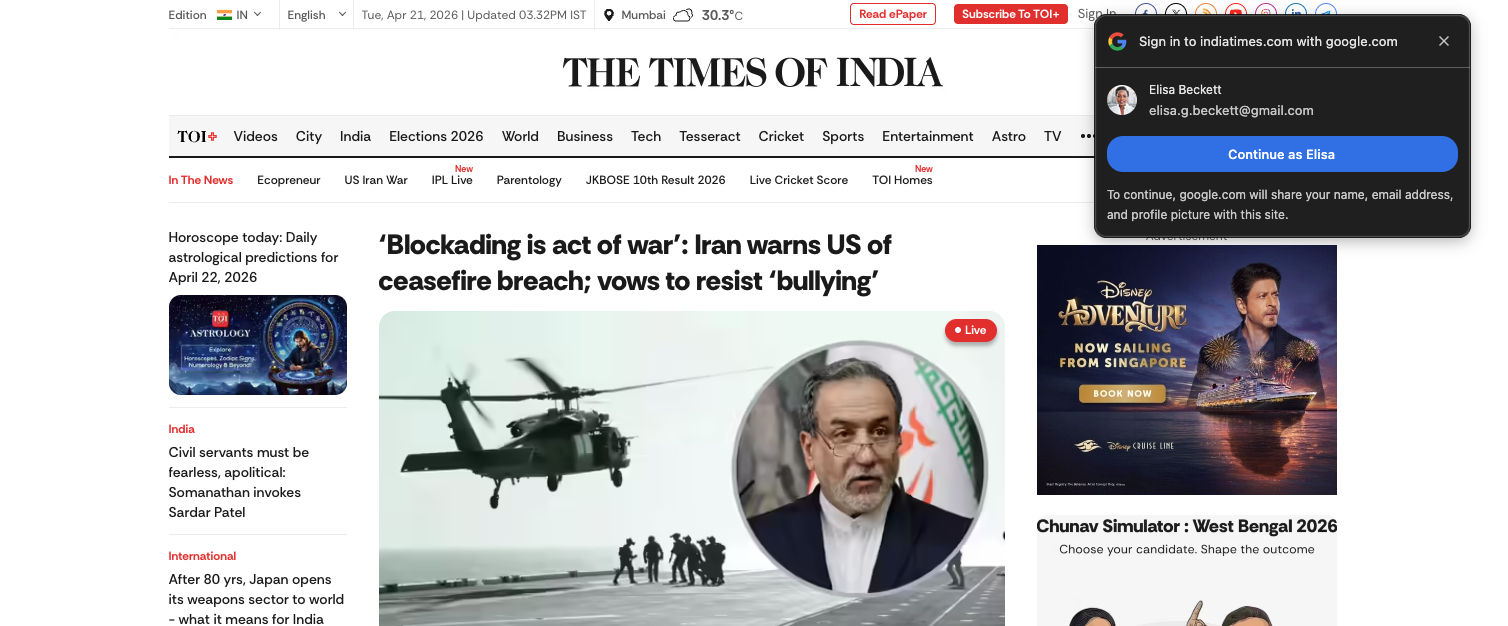
One Tap (for high-intent moments): Deployed during in-article and paywall moments, this lightweight, branded prompt captures intent while minimizing typing and steps—ideal for mobile users.
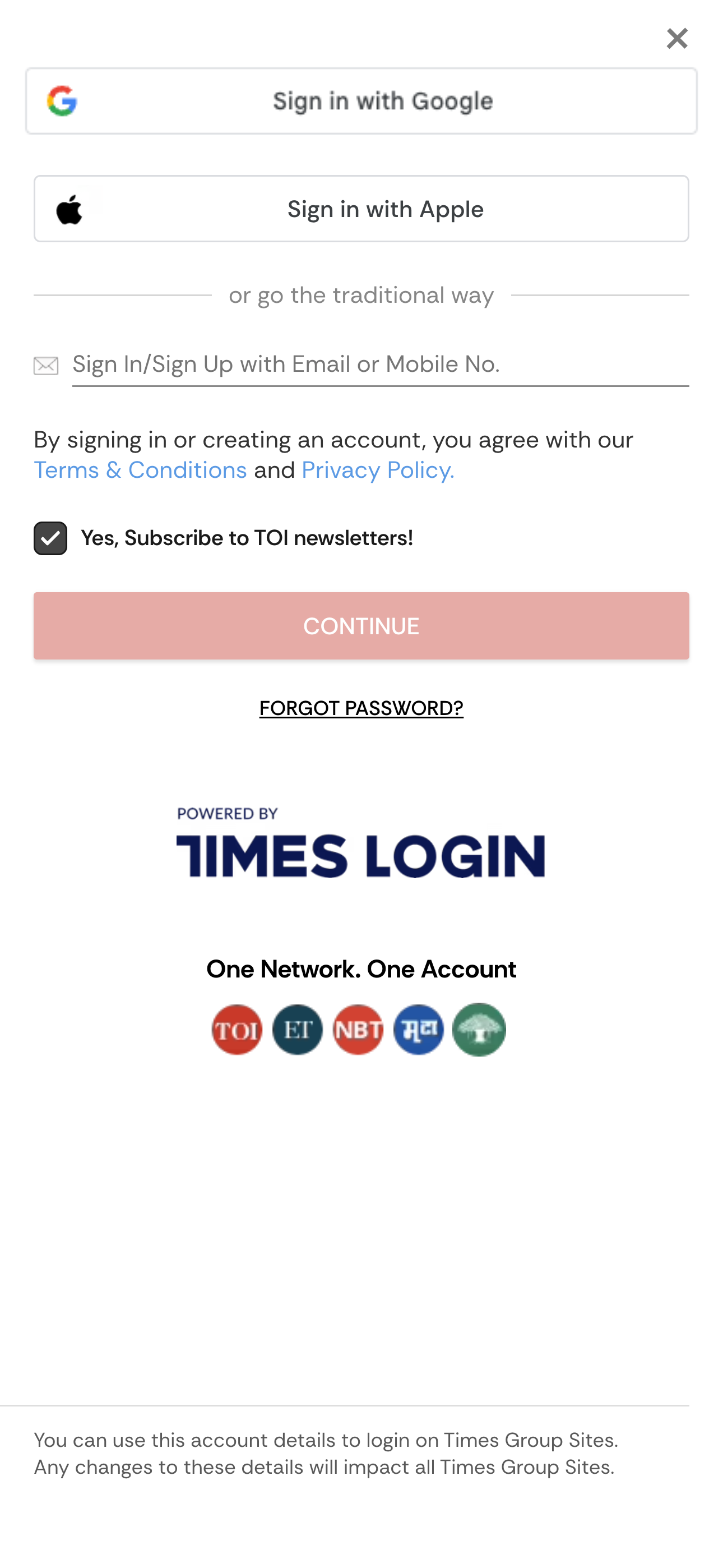
Sign in with Google Button (for deliberate entry): Placed on dedicated login and register pages to offer a clear, conventional action.
Auto Sign-In (for seamless return): Accelerates re-entry for recognized users, ensuring frictionless cross-device continuity for TOI+ subscribers.
Privacy-Resilient Infrastructure: FedCM underpins the browser-mediated prompts, enabling a third-party-cookie-free sign-in experience. It clearly communicates consent boundaries to users, preserving high trust and future-proofing TOI's identity architecture.
Implementation Timeline & Team
The project was executed swiftly by a lean, cross-functional team (one Product Manager, one Developer, and one QA Engineer) in under three weeks.
The Business Opportunity
Sign in with Google is a high-leverage growth lever. By combining One Tap and browser-mediated FedCM prompts, TOI successfully lowered friction at both sign-up and re-entry. This strengthens the middle of the funnel through smoother cross-device continuity and allows for deeper personalization via durable, first-party relationships. Crucially, the solution is privacy-resilient and future-proofed against third-party cookie deprecation—accelerating acquisition, engagement, and subscription yield in one unified move.